"Landmine issue" as a problem to be solved
It is said that the number of antipersonnel landmines buried on the earth is 70 million to 100 million. Even after wars and conflicts are over and soldiers leave the land, landmines remain there, continuing to threaten the lives of residents. In recent years, 6,000 to 8,000 accidents have been occurring annually. Most of the victims are ordinary citizens, half of whom are children. As we speak, deminers (demining workers) of each country are searching for landmines by prodding the ground with a prodder (wooden stick) and a shovel, taking a risk that they come into close contact with buried landmines. It is said that it will take as many as 1,000 years to clear all landlines buried on the earth if this old-fashioned demining style continues.
Development of a Demining Robot
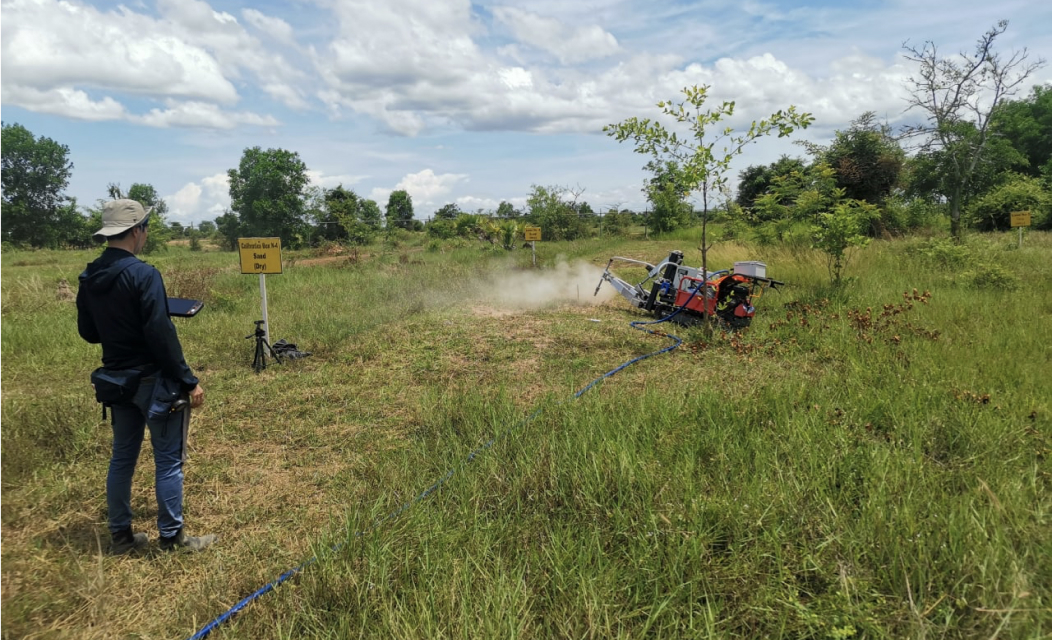
IOS has developed the demining robot DMRobot (Demining Robot: DMR) in collaboration with the Cambodian Mine Action Centre (CMAC), the Cambodian government agency that plays a central role in mine clearance operations in the country. The project aims to reduce risks faced by deminers working in hazardous environments and to support faster and safer clearance operations.
After five years of prototype development, mine clearance operations using DMRobot began in Cambodia in November 2022. In June 2024, CMAC issued a Certificate recognizing the effectiveness of DMRobot. In spring 2026, the system was officially deployed in Cambodia under a Japanese international cooperation program.
Three DMRobot units arrived in Ukraine at the end of 2025, and preparations for their deployment began in the spring of 2026.
IOS will continue working to promote the adoption of this new excavation technology for mine clearance among mine-affected countries and demining organizations around the world, contributing to safer and faster humanitarian demining operations for many years to come.
Post-Minefield Land Utilization Initiative
IOS is working to help unlock the economic potential of regions whose development has been hindered by the landmine problem. Since 2020, IOS has been promoting the Post-Minefield Land Utilization Initiative, which aims to support economic recovery in rural areas where mine clearance activities often progress slowly.
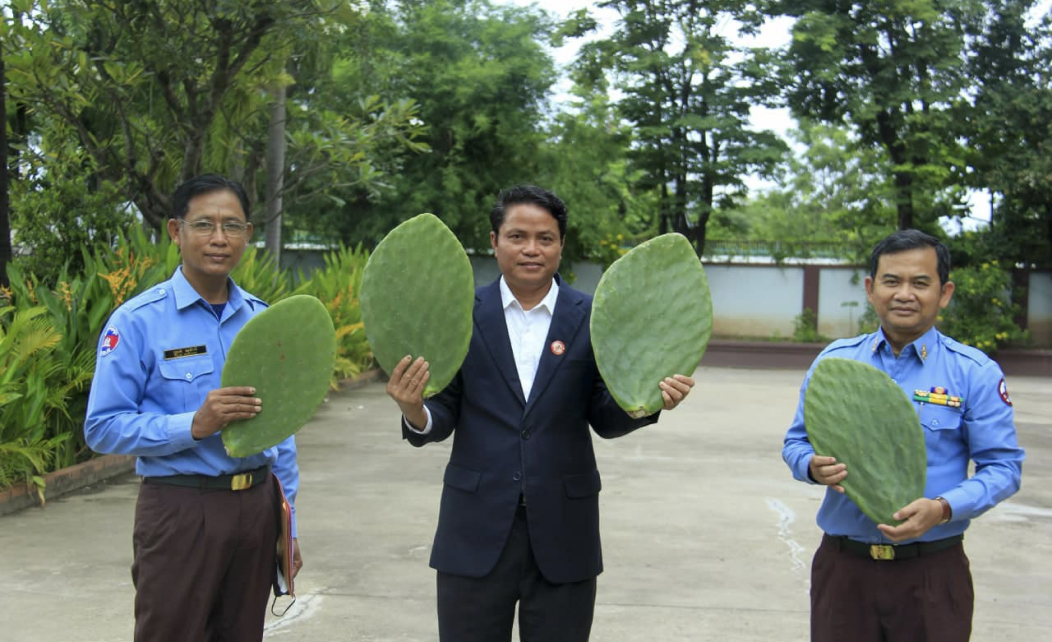
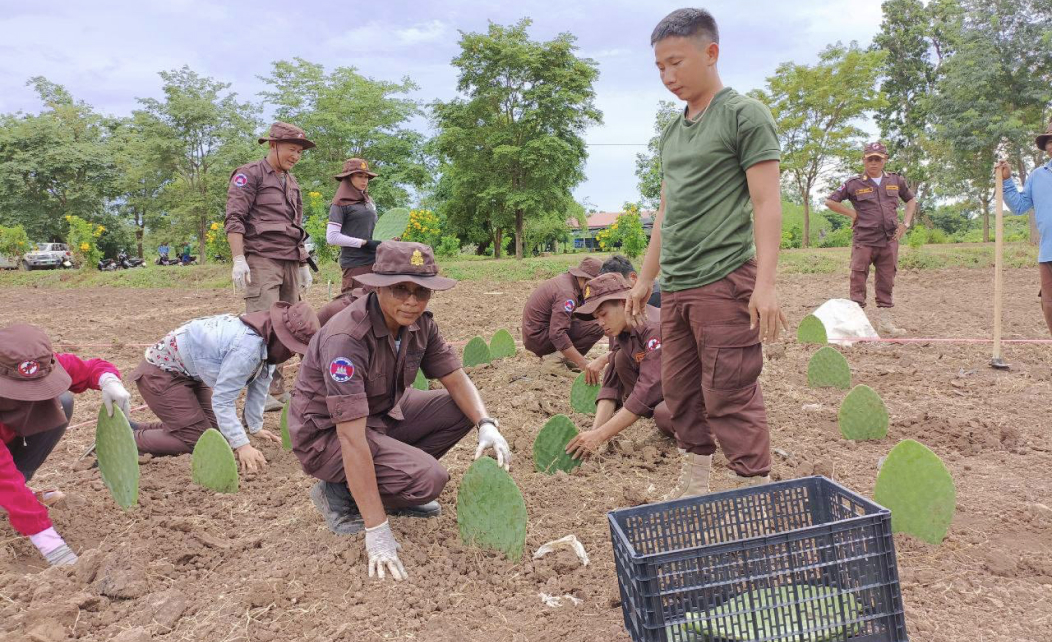
As the first project under this initiative, Mexican prickly pear cactus was transplanted to a former minefield site in Cambodia. IOS plans to develop various projects utilizing the diverse functions and potential of the prickly pear cactus.
In addition, IOS is supporting the introduction of Japanese agricultural technologies in Cambodia. IOS will continue to plan and implement a range of projects in Cambodia, while also developing similar land utilization initiatives in other mine-affected countries by drawing on Japanese technologies and resources, with the goal of enabling the productive use of former minefields and contributing to sustainable development.